What the Lamppost Knows: Reading Your High Street as a Content Plan
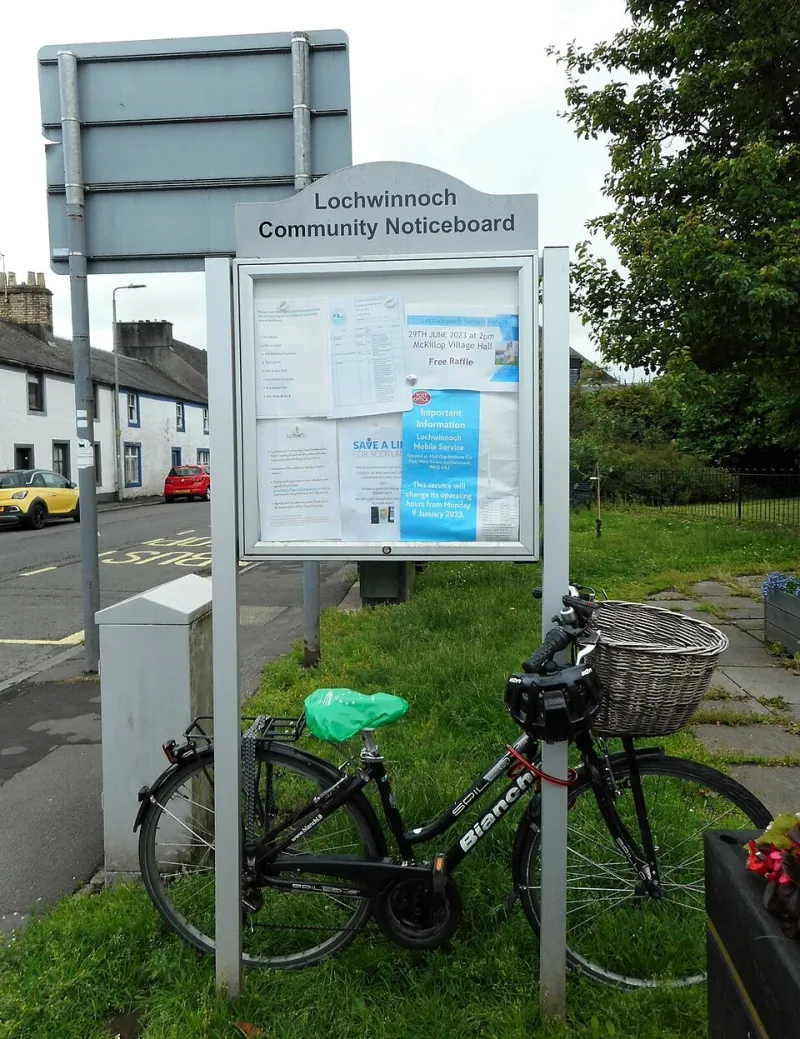
Photo: Richard Sutcliffe , CC BY-SA 2.0, via Wikimedia Commons
There is a laminated poster on the lamppost at the end of our road advertising a quiz night at the church hall. It has been up so long that the corner has curled and someone has written the new date on in biro. That poster is doing more for local engagement than most small business social accounts manage in a month, and it cost about eighty pence.
Which is the whole idea here. Before you sit down with a scheduling tool and a blank content grid, spend forty-five minutes walking the streets around your shop with a notebook. What is already pinned up, stapled up and chained to railings in your area tells you precisely what people in your postcode are thinking about this month. You just have to read it properly.
The walk: 45 minutes, one notebook, no phone
Go out on a normal weekday morning, not a market day, and leave the phone in your pocket. Walk a loop that takes in the noticeboard outside the library, the community board in the Co-op or the leisure centre, the bus shelter, the church and school railings, the launderette window, the GP surgery corridor and the park noticeboard if you have one.
Write down what you actually see, not what you would like to see. Dates, names of organisations, phone numbers, whether the poster is new or sun-bleached. The age of a flyer is a data point: a fresh one means a live campaign, a faded one means something that fizzled or was never taken down.
What counts as a signal
Almost everything, once you start looking. But it helps to sort them into four rough types.
Dated events. Quiz nights, jumble sales, Santa runs, remembrance services, school fairs, coffee mornings, parkruns. These have a date attached, which means you can plan around them rather than reacting to them.
Ongoing needs. Food bank collection lists, warm-space opening hours, a request for school uniform donations, a defibrillator fund, a hedgehog rescue asking for old towels. These tell you what people are quietly worried about.
Local identities. The football club's fixture list, the allotment society's show schedule, the brass band's Christmas engagements, the amateur dramatic society's poster with one very committed face on it. These are the things people in your area feel they belong to.
Small frictions. The bus timetable change notice. The road closure for resurfacing. The car park that now takes an app. These are the tiny annoyances everyone shares and nobody enjoys, and they are gold for a relatable post.
The mapping sheet
Back at the counter, draw four columns on a sheet of A4 and give yourself twenty minutes. It looks like this:
| Signal spotted | Who is behind it | What it tells you | Post it could become |
|---|---|---|---|
| Quiz night, church hall, 14 Nov | St Mary's fundraising team | Locals want cheap nights out; the hall is underused | 'Our three favourite quiz team names from customers this week' + share of the poster |
| Food bank list, updated Nov | Local food bank, via library board | Specific items needed, not general donations | Window collection point, one item per week, photo of the actual crate |
| Bus route 22 timetable change | Council / bus operator | Daily frustration for commuters | 'If the 22 has ruined your morning, the kettle is on until 10' |
| Allotment society show, 6 Sep | Allotment society | Proud growers, seasonal produce | Ask three plot holders what to do with a glut of courgettes |
Four columns, ten rows, and you have roughly three months of locally rooted posts without once writing 'Happy Monday, here is a photo of our product'. The fourth column is the important one: if you cannot get from a signal to a post in one step, it is probably not a signal you can use.
From signal to post
There are three honest moves, and it is worth being deliberate about which one you are making.
Amplify. Repost the poster, tag the organiser, add the details in your own words. This is the lowest-effort, highest-goodwill move and you should do it often.
Participate. Turn up, then post about having turned up. A photo of your team at the quiz, your donation in the crate, your van parked at the repair café. Participation posts only work if they are true — people can smell a photo-opportunity.
Translate. Take the underlying need or interest and make something of your own. The food bank list becomes a collection point. The bus timetable change becomes a free cup of tea for anyone who has just missed one. This is where the content gets distinctive, because nobody else in your town will think to do it.
Crediting without cluttering
A short rule set saves a lot of awkwardness. Name the organisation in the first line of the caption, not buried under eight hashtags. Tag them only if they are active on that platform and it would not embarrass them. Never screenshot a poster and crop out the logo. If you use someone's photograph, ask first — most community groups will say yes instantly and then tell everyone they know.
And if a group asks you to take something down, take it down the same day. The relationship is worth more than the post.
Joining a conversation without hijacking it
This is the fault line. There is a difference between being part of local life and using a tragedy, a fundraiser or a school closure as a backdrop for your own promotion.
A workable test: would the organiser be pleased, indifferent or annoyed to see your post? If it is anything other than pleased, change the post. Never put your logo on someone else's grief. Never use a community event purely as a caption for a product photo. And if the only connection you can draw is 'we are also local', that is not a connection — that is just geography.
When in doubt, comment rather than post. A thoughtful reply under a local group's announcement does more than a solo post that borrows the moment.
A sample month from a sample street
Say you run an independent on a parade of shops in a Midlands town. Your sheet has a remembrance service on the 8th, a school fair on the 21st, a food bank list that updates weekly, and a road closure for resurfacing in the middle of the month.
Week one: an amplify post for the remembrance service, no commentary, just the details and the road closure notice with the new bus stop location. Week two: a translate post — the collection crate in the doorway, photographed with what is actually in it. Week three: a participate post from the school fair, plus a restock note that mentions the fairgoers coming in afterwards. Week four: a quiet recap of what the crate collected, tagged to the food bank, no call to action beyond a thank-you.
None of that required a trend, a filter or an idea from a webinar. It required a walk and a notebook.
Do it again in February
Noticeboards turn over. The quiz night becomes a spring fair, the food bank list changes, the roadworks move. Diarise a repeat walk for the first week of each quarter and keep the old sheets — they become a surprisingly decent record of what your area has cared about, and the fourth column fills itself in faster every time.