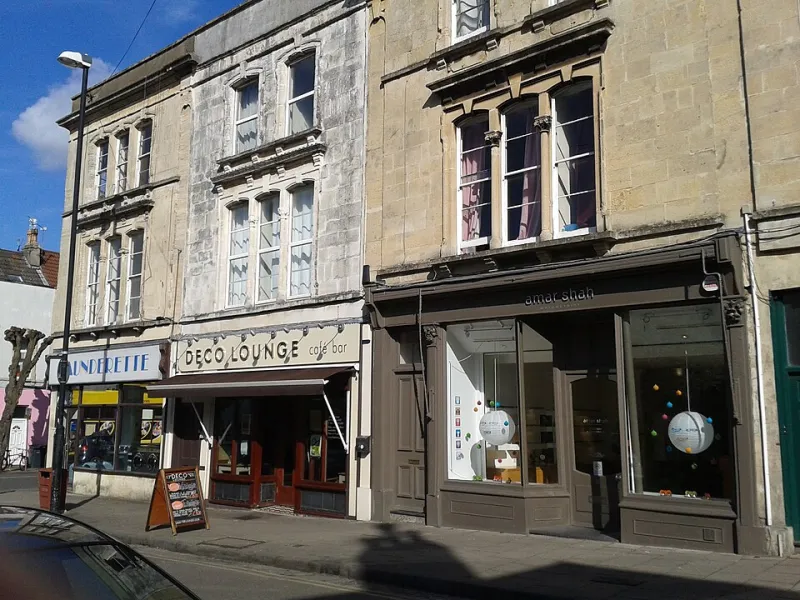
Let Them Hear the Door: Five Ways to Post the Feeling of Your Shop

Photo by Photo by Georg Eiermann on Unsplash on Unsplash
Most shop posts start with the product. The better ones start with the room. A customer scrolling past does not need another flat-lay of candles; they need a reason to believe the shop exists in three dimensions: that the door sticks a little in damp weather, that the radiator by the till is doing its best, that someone has put the radio on before the lights.
That is not about creating a fake atmosphere. It is about noticing what is already there and translating it into posts that feel like a visit rather than a catalogue. Below are five repeatable formats for UK indie shops. None require a studio, a script or a stock photo of somebody laughing at a croissant.
Start with a twenty-minute sensory audit
Before you post anything, walk your own shop slowly. Note what you can hear, smell and feel at the door, the till and the back wall. Write down three sounds, three smells and three small physical details. Keep the list by the till. This becomes your content bank for the month, and it stops every post defaulting to 'new in'.
1. The door sound post
Record ten to twenty seconds of the shop door opening and closing. That is it. The creak, the bell, the little thud against the frame. Post it as a short video or a still of the door with a line of text about what it sounds like. Caption it plainly: 'The door has a very specific creak. You will know it is us.'
This works because it is unmistakably local. A stock image of a door cannot compete with the actual door. Film it on your phone, keep it steady, and do not add music over the top. If there is speech in the background, check nobody is identifiable before you post. Add a short written description for anyone who cannot hear the clip.
2. The warm-hands post
On a wet Tuesday, the most persuasive thing in the shop might be the radiator. Photograph the object that proves the heating is on: a radiator, a kettle, a stack of dry bags by the door, a chair where people wait for the bus. Put it beside a line about the weather outside.
Try: 'It is that kind of drizzle. The radiator by the window is on, the kettle is doing its thing, and there is a dry chair if you need five minutes.' This is not a sales post. It is a hospitality post. It gives people permission to come in without buying anything, which is often what a small shop needs more than another discount.
3. The smell post without the scratch-and-sniff
Smell is the hardest sense to post, so do not pretend a photo can carry it. Translate it into specifics. Instead of 'smells amazing', name the thing: fresh coffee, cardboard boxes, lavender soap, old wood, the faint vinegar note from the pickle shelf. A close-up of the coffee tin or the soap dish with a short caption does more than a generic fragrance image.
Keep it honest and avoid overclaiming. If your shop is fragrance-free for good reason, say so. Some customers avoid strong scent, and a post that treats 'smell' as a universal pleasure can exclude them. A line like 'We keep the scent light in here, the coffee does most of the work' tells people what to expect.
4. The wet-pavement contrast post
Use the walk to the shop as your opening shot. Photograph the pavement outside, the bus stop, the puddle by the kerb, then cut to the inside: the warm light, the counter, the dry floor. A two-image post or a short before-and-after video can say 'we are the dry bit at the end of your errand' without a single product.
Caption it with the detail, not the sales pitch: 'That bit of pavement holds water for days. Inside, the floor is dry and the radio is on.' If you use a customer's umbrella or coat in shot, ask first. If you film the street, avoid number plates and clear faces.
5. The counter radio post
The radio behind the counter is part of the shop's atmosphere, but posting music can be tricky. Do not film a whole song. Use a few seconds of ambient sound, or take a photo of the radio and write about what is on. Better still, ask your team what they actually listen to and make that the story: 'The till radio has been on the same local station since 2019. We are not taking questions.'
If you include audio, add captions and a short description. If the station is playing copyrighted music, keep the clip brief and avoid making the song the point. The point is the habit, not the track.
Capture it without stock imagery
You do not need a photographer. You need a phone, a steady hand and a willingness to look a bit mundane. Take three photos before you open: the door, the counter, the window. Take one short sound recording. Write down one sentence about the weather. That is enough raw material for a week of posts.
Avoid stock images of generic shopfronts, hands around mugs or smiling assistants. They flatten the thing that makes you local. A slightly wonky photo of your actual radiator will outperform a perfect picture of somebody else's.
Consent, captions and the polite line
Sensory posts often include people, and that is where consent matters. Ask before filming staff or customers. Put a small sign by the till if you regularly take photos in the shop. Never post a customer's face, conversation or distinctive coat without permission. If someone asks you to take a post down, do it quickly and without a debate.
Accessibility is part of the same courtesy. Add alt text to images, captions to video, and a written line for any sound-led post. Avoid flashing edits and sudden loud noises. Describe the sensory detail in words as well as showing it. A post that says 'the door creaks' is accessible; a post that relies only on a creak is not.
The room is the strategy
Sensory posts are not a gimmick. They are a way of proving that your shop is a place people can go, not just a grid they scroll. You do not need all five formats every week. Pick one, post it plainly, and let the ordinary details do the work. The kettle, the door, the wet pavement and the radio are already yours. You just have to point the camera at them.