Neighbourly, Not Noisy: Five Posts That Earn Your Place in Local Facebook Groups

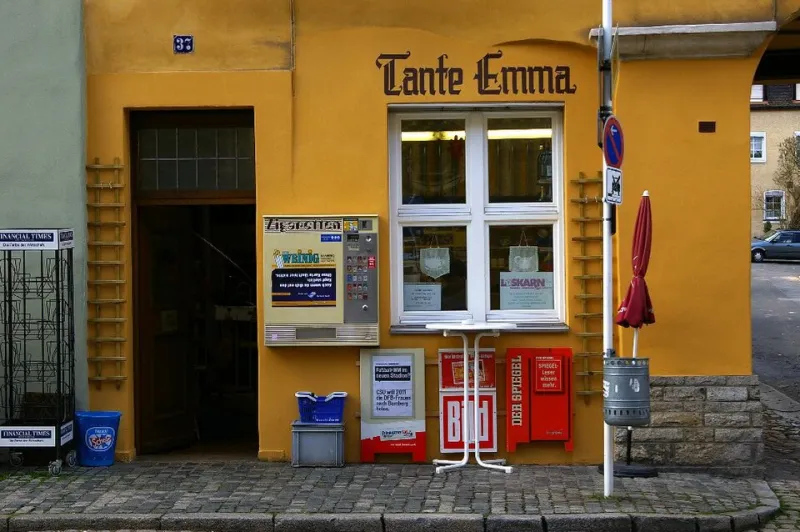
Photo: Frombowen, CC BY-SA 4.0, via Wikimedia Commons
Every town has one. Often three. The group with a blurry photo of the war memorial as its cover image, a pinned post from an admin called Dawn, and a feed that lurches between a missing cat, a row about bin collections and somebody asking for a plumber who actually turns up.
For a small business, these groups are irresistible. Thousands of local eyeballs, no ad spend, no algorithm to appease. So the shop page gets shared in, the offer gets posted, and then… nothing. Or worse, a terse message from Dawn.
The mistake is treating the group as a billboard. It is not a billboard. It is closer to the parish noticeboard by the church gate: everyone can pin something up, but the people who get read are the ones pinning things other people needed to know.
Read the room before you read the room your post
Before anything else, do the boring bit. Find the pinned post and read the rules properly. Most groups have a specific day for business posts, a ban on links, a limit on how often you can mention your own shop, or a rule that pages cannot post at all — only personal profiles can. Some admins will happily approve a genuine community notice and will delete anything that smells like a leaflet drop, and they can tell the difference within three words.
Search the group for your own shop name first. If a recommendation thread from four months ago is still getting replies, jump into that instead of starting a fresh post. Reviving an old thread looks like conversation. A brand new post about the same thing looks like marketing.
The five posts worth your name
1. The weather-day notice
Snow, heat, a burst pipe, a delivery that never arrived. On the days when normal routine breaks, the group fills with people asking whether the high street is open. Be the answer.
Open until 3 today — the gritter has been down the hill but the pavement outside is still slick, so mind the step. Card machine is working, kettle is on.
No offer, no link, no call to action. Just useful. This is the post that gets remembered in July.
2. The lost property notice
Somebody's keys, a child's cardigan, a prescription bag left on the bench outside. Posting it costs you nothing and it is unambiguously a community act rather than a sales one. Add a detail only the owner would know — a keyring, a name on a label — so you are not handing a handbag to the first person who replies.
These posts do something subtle. They show you are on the street, paying attention, and that your shop is a place where things get handed in rather than walked off with.
3. The street conditions briefing
The water board has closed the top end of the road. The market is setting up on Saturday so parking will be gone by nine. The church car park is free after six because the choir has finished. You know all this because you are there every day, and most of the town does not.
Heads up for anyone doing the school run — the top of Mill Street is shut until Friday for resurfacing. The back way past the vet is open and there are still two spaces outside us.
You have mentioned your location without selling a thing, and you have saved forty people a three-point turn.
4. The recommendation reply
Every week somebody asks the group for a decent plumber, a good cobbler, a hairdresser who can handle curly hair. These threads are gold, and the way to use them is counter-intuitive: answer as a neighbour, not as the business owner.
If you genuinely rate the bloke two doors down, say so and say why. If the question is about your own trade, be honest about what you do and do not do, and point them elsewhere when it is not your job. Nobody minds a tradesperson recommending a competitor when the recommendation is real. Everybody minds the shop that replies to eleven different threads with the same paragraph.
5. The ask-the-street question
Groups love being consulted. So consult them properly — not with a fake poll designed to boost reach, but with a question you actually need answered.
We have three boxes of unsold Christmas stock and I would rather it went somewhere useful than in the bin. Does anyone know whether the food bank takes toiletries, or is there a better home for it?
You get an answer, somebody gets the stock, and the thread fills up with people being kind to each other. That is a far better advertisement than any graphic with a starburst on it.
The ratio that keeps you welcome
Keep a rough mental tally. For every one post that mentions your shop, aim for four that do not. That sounds steep until you realise the useful posts are quicker to write than the promotional ones — no image to resize, no caption to agonise over.
Also worth remembering: the group is not one audience. It is the woman who runs the bakery, the retired teacher who comments on everything, the parent who joined for school closure news and mutes the rest. Write to the whole room, not to a customer segment.
When it goes wrong
If an admin removes your post, do not argue in the comments. Message them politely, ask what would work, and offer to follow the group rules. Admins are volunteers with a thankless job and long memories, and being the shop that took it well is worth more than the post ever was.
And if a group bans business posts outright, respect that. There is still the recommendation thread, the lost purse, the road closure. Contribution is the whole game.
One last thing
The street outside your door already has a reputation. Your job in these groups is simply to be the same shop online as you are on the pavement — the one that knows what is going on, hands things in, and does not shout. Do that for a few months and the group will start recommending you without being asked.