The Long Way Round: Making an Awkward Location the Whole Point of Your Feed
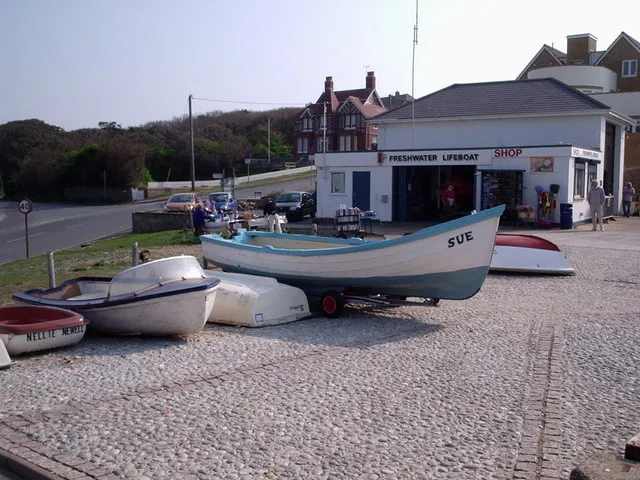
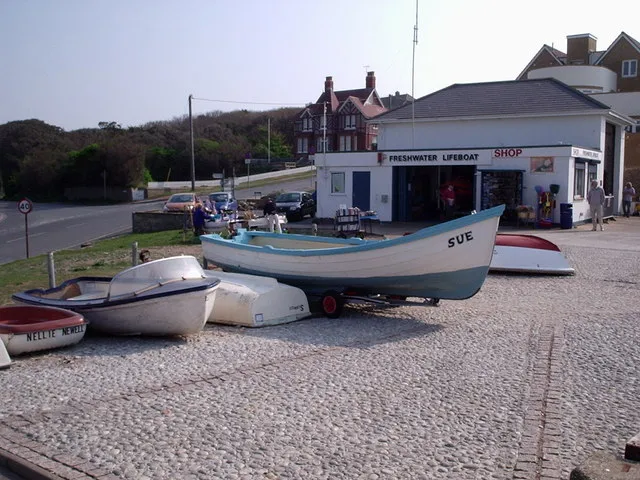
Photo: Elliott Brown, CC BY-SA 2.0, via Wikimedia Commons
Every town has one. The shop that everyone says they love, then admits they only found by accident. Down the ginnel, past the postbox, second door behind the bakery. The owner knows the routine: a customer bursts in, delighted, slightly out of breath, and says "I've walked past that alley for eleven years."
That's not a problem to be apologised for. It's material.
If your location takes a bit of finding, the instinct is to over-explain it in every caption — a permanent wince in text form. Don't. Instead, build the route into your content so that discovering you feels like a small, satisfying win. Here are five formats that do exactly that.
1. Landmark routes, not postcodes
Most people don't navigate by numbers. They navigate by things. The chippy with the blue awning. The clock that doesn't work. The bench outside the chemist where the same three people sit every morning.
So write your directions as a sequence of landmarks, and make them feel like a route rather than an apology.
"Over the crossing, past the florist's buckets, then take the alley beside the café. We're the door with the brass handle."
This works best as a carousel or a short caption on a photo of the first landmark — not your shopfront. The trick is to photograph the route, not the destination. A picture of a street corner with an arrow drawn on it in a story will out-perform a map screenshot every single time, because it's the view the customer will actually see.
If you're formatting directions for a Reel or a post, do it in plain, human beats — four or five steps, no more. People will hold a five-step route in their heads. They won't hold a paragraph of spatial gymnastics.
2. The doorway isn't boring — photograph it properly
Independents often skip the doorway shot because it feels unglamorous. But the door is the moment of arrival, and if it's distinctive, it's a navigation aid with a personality.
Use a doorway photo for a couple of reasons. First, so people know what to look for at the end of the alley. Second, so that once they've found you, the image is instantly familiar. A brass handle, a chalkboard propped at an angle, a crooked hanging basket, a step that trips everyone exactly once — these are remembered details.
Shoot it in the light of the actual arrival time. If most people find you at half four, a bright midday shot is a mild lie. Shoot it at half four, even if it's gloomy. The gloom is accurate, and accuracy is a form of welcome.
A small note on captions: swap "we're a bit hidden" for something with a bit of spine. "Best door on the alley" carries a different energy than "sorry we're easy to miss." Same information. Completely different customer.
3. Walking videos that do the finding for them
The single most useful piece of content a hidden shop can make is a 20-second walk from a recognisable point to the front door. Phone on the shoulder, no voiceover needed, one line of on-screen text at the start: "From the bus stop to our door in 90 seconds."
Why it beats a static map: it shows pace, turnings, and where to hesitate. The moment in a video where you turn off the main street answers the exact question people are too polite to ask — "am I going the right way?"
A few practical things we've seen work well:
- Film it twice. Once at opening, once at school-pickup time. Different crowds, different confidence.
- Keep it unedited. No transitions, no music swelling at the turn. The roughness is what makes it believable.
- Save it and reshare it. Pin it. Link to it in replies to the inevitable DMs asking where you are.
Small detail worth adding: end the video on the door opening, not the empty street. The hand on the handle does a lot of work.
4. Credit the neighbours
If people have to walk past four businesses to reach you, those four businesses are already doing you a favour. Say so.
Tagging the bakery you sit behind, the record shop around the corner, and the barbers who send people your way does two things. It makes you a place within a place rather than a stranger to the street — and it borrows their reach without paying for it. A posted line like "right behind [bakery], because the smell alone is worth the walk" gets shared by people who've never set foot in your shop.
Don't make it a formal collab announcement. Make it a passing compliment. The best neighbourly content reads like someone who genuinely likes where they work, because that's exactly what it is.
5. One saved highlight that answers the question forever
Every hidden shop has the same repeated DM. Rather than answering it fresh every time, build a permanent 'Find Us' highlight — the top of your profile is prime real estate and most independents spend it on products.
Pin inside it: the walking video, the landmark carousel, a photo of the door, your opening hours, and a note on parking or the nearest bus route. That's it. Five things, saved forever, one tap from the top of your grid.
Then, in every post where someone asks, reply once, kindly, and point them at it. The highlight quietly takes over the work of a shop sign — it's just placed somewhere people actually look.
The reframe worth pinning up
Somewhere along the line, small shops learned to apologise for being hard to find. The better read is that being tucked away is a filter. The people who make the effort tend to be the ones who come back, who tell a friend, who put a photo on their story with a caption that starts "you'd never find it."
That sentence is a compliment. Write content that treats it like one.