The Full-Price Fortnight: Five Posts for Indies Sitting Out Black Friday 2026
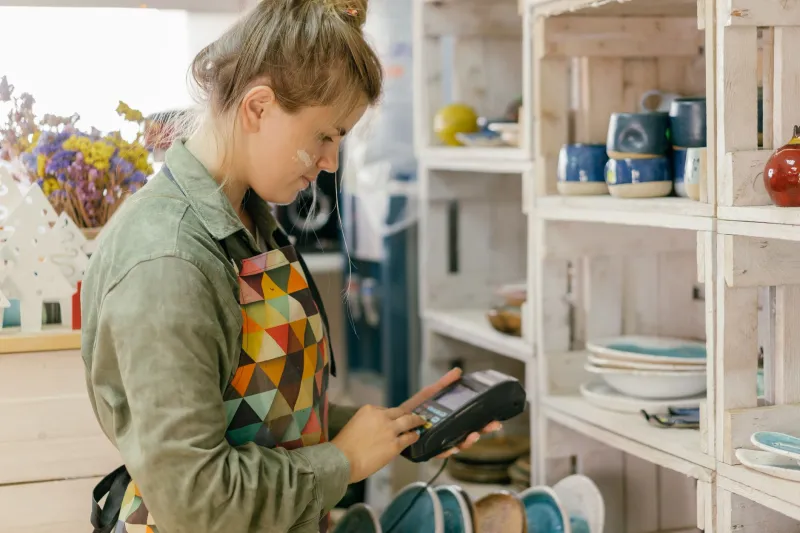
Black Friday used to be an American curiosity you could safely ignore. Then it arrived in your inbox in mid-October, courtesy of every wholesaler, card-machine provider and software subscription you have ever signed up for. By the time 27 November 2026 comes round, most independents are weighing up two bad options: slash margins you cannot afford to lose, or go quiet and hope nobody notices.
Neither is a strategy. Going silent for a week hands the conversation to everyone else. Discounting out of panic teaches your regulars to wait. There is a third road, and it runs straight through the sales moment without joining it.
Rule zero: don't disappear, and don't lecture
The two ways this goes wrong are opposite and equally common. The first is the disappearing act — no posts from Tuesday to Monday, account looking abandoned, customers assuming you have closed. The second is the sermon: a paragraph about the real cost of cheap clothing, a dig at the shops down the road, a sentence that begins 'unlike some businesses'. One of those gets you sympathy. Neither gets you sales, and the second quietly annoys people who genuinely do want a bargain this week.
So the framing is simple. You are not anti-Black-Friday; you are pro-something-else. You are open, you are stocked, you are here all week, and the price on the label is the price. Say it once, cheerfully, and then get on with being interesting.
1. Value receipts
A 'value receipt' is a post that shows what a customer's money actually covers, item by item, without a single word of guilt-tripping. A bakery can list where the flour comes from and how many hours the overnight prove takes. A bike shop can break down a service: strip, clean, replace, rebuild, test ride. A framing studio can show the offcut pile and explain why the moulding costs what it costs.
Keep it visual. Photograph the receipt-style list on your counter, handwritten. Three or four lines is plenty — the point is transparency, not a TED talk. This is the post that answers 'why is it that price?' before anyone asks, and it works just as well in a quiet February as it does on 27 November.
2. Restock notes
Nothing beats newness for pulling eyes away from a banner shouting 40% OFF. A restock note is the plainest post you can make and one of the most effective: what came in this week, how many of it, and when it goes on the shelf.
One photo of the actual delivery. A line of honest text — 'six of the navy, four of the grey, all size 10 to 16, in the shop from 9am Thursday'. Be specific about numbers, because specificity is what separates a restock note from a generic product post. When it is gone, say it is gone. That habit builds a small, healthy sense of urgency that has nothing to do with money off.
3. Team picks
Hand the account over for a day. Each person picks one thing in the shop they would genuinely buy, or already own, and says why in two sentences. No brand voice, no marketing copy, just a human choosing.
This format earns its place in late November because it is impossible to discount. A person's reason for liking a jumper does not go down by 20% on Friday. It also gives you a stack of photographs of staff you can reuse on quieter weeks, and it quietly signals that you employ people — which, for a lot of independents, is the whole point.
4. Booking-led offers
If you sell a service rather than a shelf of stock, you have an advantage this week: you can offer something that is not a price cut. A free fifteen-minute fitting. A longer appointment slot. A first-session session where the cost comes off a course if they sign up in the room. Early access to a January slot before it opens publicly.
All of these are worth money to the right customer and cost you time rather than margin. Spell out exactly what the customer gets, when it is available and how many there are — 'twelve slots, Thursday to Saturday' works far harder than 'limited availability'.
5. Community invitations
This is the one that turns a defensive week into a good one. Late opening with something warm in a cup. A repair clinic in the back room. A collection point for the local food bank, with the list of what is actually needed. A five-minute chat with the person who runs the community garden, filmed on a phone.
The invitation does not have to be a promotion. It is a reason to walk through the door on a weekend when the high street is loud. Put the details in the post, put the times on a piece of A5 in the window, and mention that there is no charge — otherwise people will assume there is.
The schedule: Monday 23 to Sunday 29 November
You do not need to post more than usual this week. You need to post with a bit more intention. A workable shape:
- Mon 23 — the plain statement. One post, pin it: open all week, normal prices, here are the hours.
- Tue 24 — value receipt. This is the week people are comparing prices, so explain yours.
- Wed 25 — restock note. Newness lands midweek, before the noise peaks.
- Thu 26 — team picks. Human, warm, zero discount energy, good for shares.
- Fri 27 — community invitation, plus a story post from behind the counter. Do not go quiet on the loudest day of the retail year.
- Sat 28 — booking-led offer, or a simple 'still here, still full price, still lovely' post with a photo of the shop mid-afternoon.
- Sun 29 — a quiet thank-you, and a nudge towards Small Business Saturday on 5 December, which is your real moment anyway.
When someone slides into your DMs asking for money off
Have a line ready, and keep it short and warm. Something like: 'No discounts this week I'm afraid — but I'll happily throw in gift wrapping, and the loyalty card still applies.' Offering a small, cheap extra protects the price and keeps the goodwill. What you should avoid is the long justification; nobody asking for 10% off wants a paragraph about your rent.
What to measure afterwards
Ignore the flat comparison with last year's discount week, because it will not flatter you. Look instead at saves, replies, DM conversations started, and how many people clicked through to opening hours or booking pages. Then look at January, when the shops that trained their customers to wait are quiet and you are not. That is the return on a full-price fortnight, and it takes a couple of months to show up.